This article was originally published in the fall 2011 issue of The Crow.

Conway Caines has spent most of his life in a place still quiet: Port Saunders, Newfoundland, where 747 people live comfortably around the harbour. The air is spiced with sea salt. It’s a place where great explorers came and dipped their nets, found them full, and settled.
The village’s well-protected harbour, nestled into the Great Northern Peninsula, was once busy with traffic. From his window, Conway looks out at the wharfs. Men still set their nets and wait but, these days, dreams of plenty are as faint as the city lights fishers live to avoid.
Conway remembers the night former Fisheries Minister John Crosbie announced the cod moratorium. Men in their wheelhouses stood still in disbelief. Instantly, everyone was out of work. It’s not the only poison this village has swallowed.
It’s springtime and the little harbour should be bustling as men prepare for the seal hunt. Instead the harbour is calm. Conway takes a sip of tea and sits back down. They used to hunt.
In years past, the men of the village welcomed the fisherman’s broadcast
annual announcement of the seal hunt’s opening. Conway was not much more than 13 when he went on his first hunt. It was an early rise. The crews loaded their boats and steamed out to sea. There was lots of ice back then.
When a patch of seals came into sight, they shut down the engines. After a quick breakfast on board, they were out on the ice. Around ten in the day, the job became a little easier. The sun was just above the floes and the seals basked in the warmth. With little more than a piece of toast in his belly, Conway and his father walked toward a patch of seals.

Before long, the afternoon sun was gone and a sharp westerly breeze took its place. Conway hauled a seal carcass to their dragger, trying hard to control his shivering. They worked fast. Three men on deck cleaned and packed the seals as fast as the others passed them up,
“Gotta get ‘em skinned before the rigor mortis sets in, boys!” one yelled. Despite Conway’s best efforts to hide it, a man aboard noticed how cold the boy was.
“Here, son,” he said. “Haul off dem gloves, this will help.”
The man grabbed the last seal that had been pelted, opened up its gut and stuck Conway’s hands in.
“There ya go, b’y. Warms ya up nice, doesn’t it?” With warmer hands, Conway was quickly back into the routine. He easily lifted a 40-kilogram seal and chucked it up and over to the men. He marveled at the speed of their work, how their faces showed no sign of the below-freezing temperatures.
He was proud to be on the water with these men. Yet he was still relieved to hear the day’s quota had been caught and it was time to call it a day. Back on board the dragger, they steamed toward the sunset. The kettle was on; the crashing waves and cold westerly wind now felt like a lullaby.
It’s no wonder the Atlantic Ocean surrounding Newfoundland is better
known as the Sea of Tears; it bears a cold history. Men have braved the minus 50 temperatures, the nasty northwesterly winds and the swallowing ocean for as long as ice floes have surrounded the rock. The seal hunt is as old as the island. Newfoundland’s first people hunted seals over 4,000 years ago. The ice floes around the island have always been peppered with seals. 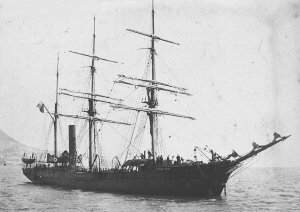
As ships evolved, the 19th century was dominated by the sealing industry. In 1976, over $5 million was added to Newfoundland’s economy by the seal hunt. It has always been barbaric trekking across ice, wind lashing in your face, but it was ‘the way.’ Men would stab through their hands and feet with their gaff, and keep on going. Sometimes seal fat would get into their cuts and scrapes, causing an infection called seal fingers.
In the old days, on-board carpenters built coffins for the men who were lost. Death was all but guaranteed. Nevertheless, still they went, every spring. The hunt was life and life was the hunt. Some argue it is the most dangerous hunt in the world, but that’s never stopped a man from going out on the ice.
Conway remembers one year when he almost lost his friend. It was a bonechilling day. They were sealing off Fort Bough when they noticed a patch of seals. Their spirits rose and they made way across the ice. They came to a slushy area with a lot of breakage. They had to jump ice-pans, like most times, to get to the seals. John was jumping pans when he reached one that couldn’t hold his weight. A doughboy, they called them, and down he went.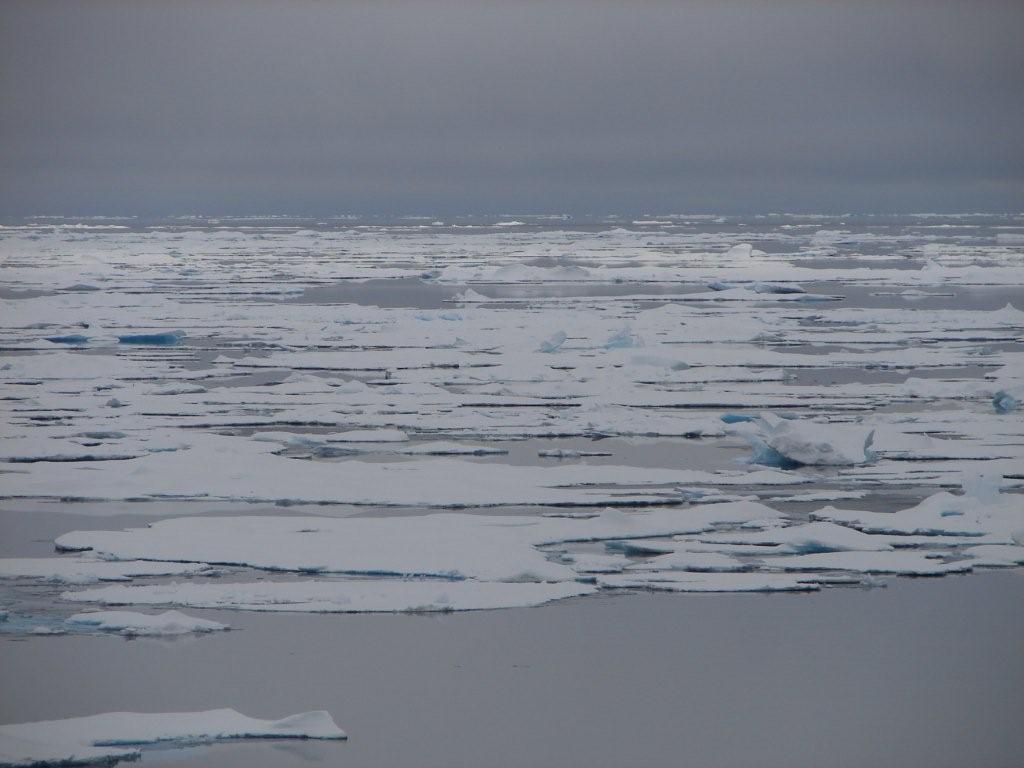
Thinking fast, John placed his hakapik across the ice pans, saving himself from slipping completely into the watery deep. The men grabbed his cold, soaked body up and out of the ice.
Thus Newfoundland’s boys were quickly turned into men. They were born with sea legs. The warm gushing blood of the seal hunt nourished coastal life ever since the Paleo Eskimos first embraced the northern rock of the island, some living and working just eight kilometers from Conway’s current home. The hakapik was their briefcase, the white ice their office space, and the seal their paycheque.
Then things changed. Living in New Brunswick, a man named Brian
Davies took notice of the hunt. He was close enough to get in and take photos. After being welcomed to photograph the hunt, he published the bloodiest possible photos. Davies said he saw a seal skinned alive, an allegation he later retracted in court. In March 1964, television spread the images wide and the anti-sealing movement was born. Davies thought there was a better way to live off the ice. He would bring American tourists to Newfoundland to look at the seals. Wildlife tourism was a more promising industry than the seal hunt, which was barbaric, he argued. But first he had to stop the hunt. Seeing is believing, he used to say. The best tactic was to bring people out on the ice to witness the death-twitches of a bloodied seal.

The tactic worked. In response, the International Fund for Animal Welfare launched a global campaign that many argue has been the greatest factor in ending the 4,000-year-old hunt. Money came in quick. In four years, IFAW was generating annual revenues in excess of $500,000. Davies’ pictures did their job, especially after IFAW decided to hire Coca-Cola’s New york-based advertising firm. The Stop the Seal Hunt campaign was off to a bloody, vivid, red-and-white start.
In on more than 200 young white-coats. Drenched in dye, the seals were economically valueless – but also more susceptible to the cold and predators. Sheryl Fink is the director of IFAW’s Seal Program.
She remembers taking a flight to Newfoundland one time. Her seatmate was a man from the island. She was shocked by his reaction when she told him who she was. Their happy chitchat soon turned into an uncomfortable silence; he closed himself off and turned away.
The man was from St. Anthony, a town about two hours north of Port Saunders, one of the towns badly shaken by the dying hunt. But Fink doesn’t believe tradition is a good enough reason for the hunt to continue. She sees it as a short-term activity that doesn’t bring in enough revenue to keep someone from leaving his or her community.
Times have changed, says Fink, and it’s time to put the hunt to rest. Fink says the IFAW campaign is more focused now; they operate in 11 countries around the world and are no longer reliant on Davies’ single-minded leadership. However, his tactic of using visuals remains IFAW’s most effective tool for gathering public support. Photos that portray inhumane kills get the strongest reactions – even though Fink admits such kills, which happen when a seal isn’t hit directly on the head, aren’t the norm.
And although it’s been nearly 25 years since Newfoundlanders have hunted white-coats, white seals are still featured in IFAW ads. A brief, fine print statement is included: “This seal will be killed after it is matured into a grey seal.
”When the IFAW polled Canadians, they asked the question, “Would you support legislation that protects seals less than one year of age?” Most people said yes. This innate ‘baby appeal,’ combined with the notion that seals are killed for luxury items like purses and coats, is what turns people off the hunt. Fink has no intention of updating the photos or adjusting IFAW’s campaign to factor in those still making a living on the hunt. She says the men should be able to find work elsewhere.
When John Cabot discovered Newfoundland in 1497, he reported back to England that you could throw a bucket overboard, haul it back up and find it overflowing with fish. Conway’s ancestors came for the fish; the sea was always plentiful.

Port Saunders became a boomtown. Things changed around 1949, when Newfoundland finally agreed to join Canada. Fueled with dreams of modernization, the province attempted to urbanize the island. Men, women and children were asked to leave their outport homes. This process brings back bad memories for many Newfoundlanders, some of whom were nearing retirement and unable to adjust to city life.
Global warming, along with over-fishing and mismanagement, added to the growing coastal distress. Today’s fishers find it hard to survive. The seal hunt supplements their meagre incomes.
This is why Clyde Jackman, Newfoundland’s minister of fishers and aquaculture, is at war with anti-sealing protestors. It’s been a tumultuous battle but one he says has always been worthwhile. Thousands of families rely on sealing. He feels it was a mistake for the federal government to stand back and allow the initial anti-sealing photofrenzy to proceed unchallenged. Now they’re playing catch-up against powerful, well-heeled organizations that have the attention of celebrities like Pamela Anderson, who raised $4.8 million for People for the Ethical Treatment of Animals in a single ad campaign.
 “They are practically operating as a business … money doesn’t seem to be an obstacle for them,” Jackman says.
In the spring of 2011, protestors printed, emailed, posted and tweeted a provocative image of crimson on the white ice surrounding the island Jackman knows and loves. The hunt forbids the killing of white coats, yet Jackman sees the image of white coats everywhere.
These days, Jackman is working alongside the Canadian government to alter the prevailing image of cruelty. They’ve made connections with hunting groups in Europe, and are touting the medicinal value of seal products, taking the emphasis off fur. Europe represents one of the industry’s most important – and toughest – customers. In 2006, Canada exported nearly $6 million in seal product to European Union countries. Then in 2009 the EU decided it would no longer accept seal products, a ban Jackman maintains was triggered by the emotional appeal of white coat photos and not the exposure of any actual documented cruelty.
Later that year, Ottawa challenged the ban under the rules of the World Trade Organization, arguing that it was a form of trade discrimination against an industry that is no more or less humane than any other animal industry.
“We are harvesting an animal just like people do cows and chickens,” Jackman says. If anything, Jackman argues, the hunt is more humane compared to other forms of animal husbandry because the seals live and die in their natural environment – unlike livestock packed into feedlots and then driven to the killing floors of industrial slaughterhouses.
The WTO fight continues to this day. In June 2011, the EU released a statement advising Canada to drop its challenge because it was derailing talks on a Canada-EU trade agreement. But Jackman vows he will continue to fight for the hunt until the rest of the world realizes exactly what it means to Newfoundlanders. “The reality is, we catch fish for a living and we seal. This animal, the seal, they are there in abundance and we go out, we harvest them and we make a living off them,” he says. “We’ve done that for centuries and I certainly hope we can do that for centuries to come.”
Meanwhile back in Port Saunders, times have never been this tough.
Conway and his partner Colleen have two boys. So far, the family has managed to stick it out in the little village. It is home. For Conway, the prospect of changing careers at age 32 is disheartening. “I fish,” he says. “Seal, crab, lobster, turbot, halibut, capelin, mackerel, and herring.”
In spring, the fishery falls quiet. Bigger boats head far out to sea to harvest shrimp, but Conway doesn’t have the boat or the license needed to follow them. He would normally take advantage of the short downtime to go sealing. But not this year.
Conway says Newfoundlanders have just been let down. He is angry the protestors were allowed to come to his island and photograph the hunt; he says they manipulate the photos and tell the story they want to tell. He says their campaign belongs to the Eighties, when the industry crested and larger ships were sealing – not sealers like Conway, who take just enough to make a living.
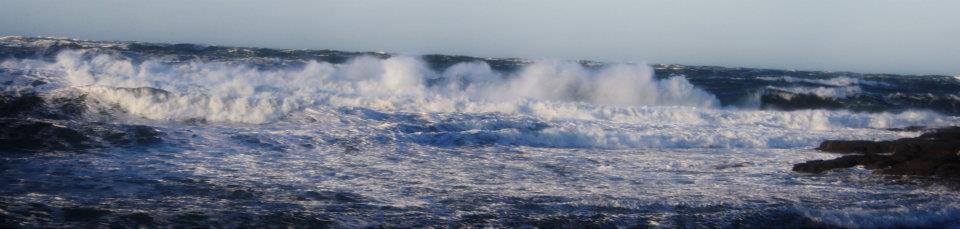
Conway never thought about making millions on the international market. He simply wants to pay the bills. Conway can see the tide from his window. It flows in and out; waves crash and he knows he is home. Walking out to his shed, he takes in the salty air. He looks out on the sea beyond, big, blue, and cold, and notes the quietness of the sheds packed around the harbour.
In the old days, they would have been bustling as men prepared for the great hunt. He turns back toward home, to his wife and two children. He has to feed them; they need him to survive.
It’s common for Newfoundland’s men to give up and move out west. Conway has been to Alberta; he has worked in the oil fields and has even given Toronto a go. But there was nothing out there for him. “I grew up here,” he says; summer days he would row across the harbour over to the island and row back. He cannot think of life any other way.
As he steps back inside his house, a distant seagull cries. He looks at his son and tells him if he could go on the hunt this spring he would love to take the boy with him, out on the water.